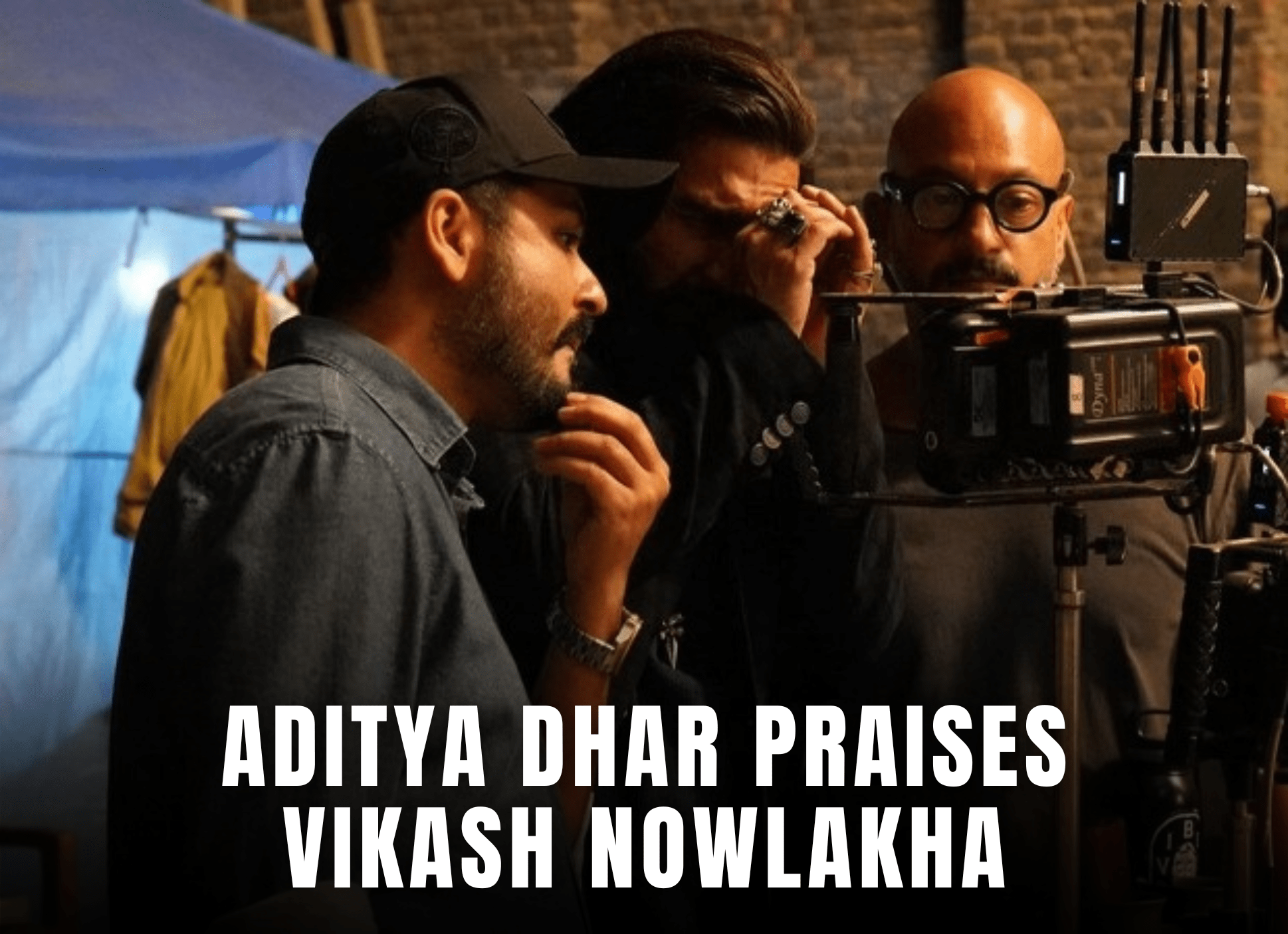
After the massive success of Dhurandhar: The Revenge, which crossed the ₹1,500 crore milestone, director Aditya Dhar took to social media in a heartfelt moment that clearly shows why Aditya Dhar praises Vikash Nowlakha, which has become a widely discussed topic among film enthusiasts. He highlighted the incredible contribution of cinematographer Vikash Nowlakha, whose visual storytelling played a crucial role in shaping the film’s cinematic brilliance.
While audiences continue to celebrate the film’s gripping action and Ranveer Singh’s powerful performance, Dhar’s heartfelt tribute reveals the deeper creative effort that shaped the film’s stunning visuals.
A Last-Minute Entry That Changed Everything
In a candid Instagram post, Aditya Dhar shared that Vikash Nowlakha was the final Head of Department (HOD) to join the project, just days before filming began. Despite the late entry, Dhar described his arrival as nothing short of “destiny’s intervention.”
After reading the script, Nowlakha expressed a deep emotional connection to the story, saying he had waited decades for a project like this. That passion is clearly reflected in the film’s final output, where every frame feels intentional and immersive.
Crafting a Blockbuster Under Extreme Conditions
One of the standout aspects of Dhurandhar is its scale. From the bustling streets of Amritsar to the challenging terrains of Leh, the film demanded both physical endurance and creative precision.
Aditya Dhar praises Vikash Nowlakha for leading his team through these extreme conditions while maintaining efficiency. According to Dhar, the team managed to capture visuals equivalent to “two films within the time and budget of one.”
This wasn’t just about speed; it was about preserving a strong visual identity. Nowlakha ensured that every shot aligned with the film’s emotional tone, delivering both scale and substance.
Why Ranveer Singh Calls Him the “Unshakeable Rock”
Lead actor Ranveer Singh also acknowledged Nowlakha’s contribution, referring to him as the “unshakeable rock” of the production.
In an era dominated by CGI-heavy filmmaking, Nowlakha’s approach stood out. He focused on creating “breathing frames”, shots that feel alive and emotionally connected to the characters. This method added authenticity and depth, helping Dhurandhar set a new benchmark in the spy thriller genre.
Dhar summed it up best by saying that Nowlakha is not just a technician, but “the eye, instinct, and soul” of the film.
A Culture of Collaboration Behind the Success
The success of Dhurandhar goes beyond box office numbers. It reflects a strong culture of collaboration. Alongside praising Nowlakha, Dhar has also acknowledged editor Shiv Kumar Panicker as a “silent co-director,” emphasising the importance of every department in filmmaking.
This team-driven approach is a major reason why the film resonates so strongly with audiences.
Key Takeaways from the Collaboration
- Emotion-Driven Visuals: Every frame enhances the storytelling rather than just showcasing scale.
- Efficient Filmmaking: Delivering high-quality output within tight timelines and budgets.
- Experience Meets Passion: Nowlakha’s decades of experience brought depth to a modern blockbuster.
- Real Over Artificial: Minimal reliance on CGI created a more authentic cinematic experience.
Final Thoughts
The story of Aditya Dhar Praises Vikash Nowlakha is a reminder that great cinema is not just about actors or directors, it’s about the collective vision of an entire team.
Vikash Nowlakha’s contribution to Dhurandhar highlights how powerful cinematography can elevate a film from entertaining to unforgettable. As audiences, it’s worth appreciating the artists behind the lens who quietly shape the magic we see on screen.
Frequently Asked Questions
Aditya Dhar praised Vikash Nowlakha for his exceptional cinematography in Dhurandhar: The Revenge. His work brought emotional depth and visual excellence to the film, making it a cinematic success.
Vikash Nowlakha served as the Director of Photography (DOP), responsible for capturing the film’s visuals. His work ensured every frame aligned with the story’s emotions and scale.
His approach focuses on “breathing frames,” meaning visuals that feel natural and emotionally connected, rather than relying heavily on CGI.
He played a key role in shaping the film’s visual identity, shooting in challenging locations like Leh and Amritsar while maintaining high production quality.
Ranveer Singh called him the “unshakeable rock” of the production, highlighting his importance in the filmmaking process.